Honest, useful guides
Trezor suite is a crypto app for earning on USDC and USDT while keys stay offline
Trezor suite is the desktop and mobile app for managing a Trezor hardware wallet, sending crypto, reviewing balances, and accessing USDC or USDT yield from one account view. Its main distinction is the pairing of cold-storage signing with an everyday portfolio interface: private keys remain protected by the device, while the app handles account discovery, transaction preparation, swaps, buying, selling, and stablecoin earning workflows.
The app is built for people who want the control of a hardware wallet without treating every routine action like a command-line task. It brings Bitcoin, Ethereum accounts, ERC-20 tokens, selected EVM assets, and stablecoin tools into a single interface, then pushes sensitive approvals back to the physical Trezor device. That device confirmation step is the reason the screen in the app and the screen on the wallet both matter.
Where USDC and USDT yield fits into the wallet flow
The stablecoin yield feature is aimed at users who already hold dollar-denominated tokens and want them to do more than sit idle in an address. USDC and USDT are the practical focus because they are widely used for crypto cash management, exchange settlement, and DeFi liquidity. Inside Trezor suite , the user starts from an existing account view rather than moving funds to a separate exchange dashboard.
The important workflow is simple: choose the supported stablecoin, review the available earning option, read the rate and provider details shown in the app, and confirm the action on the hardware wallet. The account software prepares the transaction, but the wallet device protects the signing process. Rewards and availability follow the underlying yield provider and market conditions, so the displayed terms matter at the moment of use.
The offline-key model behind everyday actions
A Trezor hardware wallet stores the private keys away from the phone or computer running the app. When a transaction is created, the app shows the destination, token, amount, and fee context, then the device asks for confirmation. This keeps the signing authority in the dedicated hardware wallet instead of leaving it exposed to a browser session, mobile app, or exchange login.
That model applies to more than transfers. Swaps, stablecoin earning, and token movements still revolve around transaction approval. Trezor suite gives the larger screen and account organization; the device supplies the physical approval checkpoint. Users should compare addresses and amounts on the hardware display because malware on a computer targets screens and clipboards before it targets the secure element of a wallet.
What the app shows after connecting a Trezor wallet
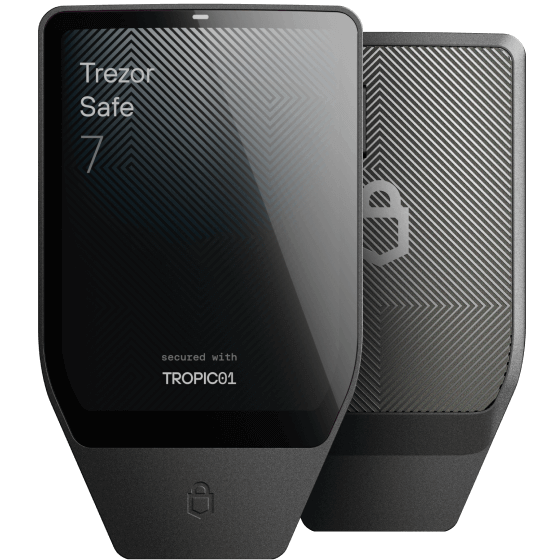
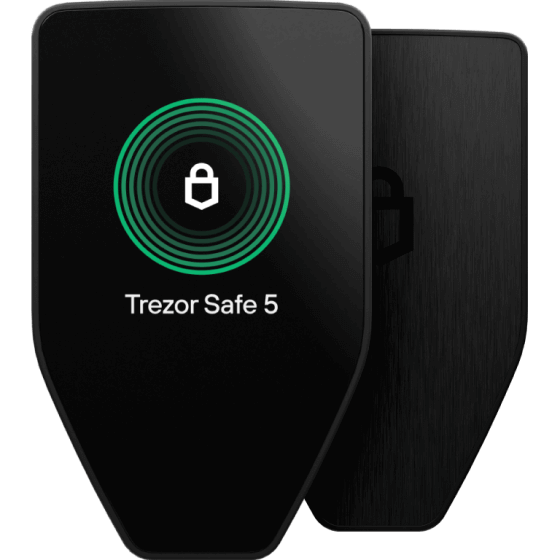
Once a Trezor Safe 7, Trezor Safe 5, Trezor Safe 3, Model T, or supported older device is connected, the app opens into portfolio management rather than a blank signing screen. It discovers accounts, labels supported assets, displays balances, and organizes send and receive actions by network. Bitcoin accounts sit beside Ethereum-style accounts, while ERC-20 tokens appear under the relevant Ethereum address.
Some assets require a third-party wallet interface even when the Trezor device still signs the transaction. This distinction matters for altcoin users: hardware support and native app display are separate ideas. Trezor suite covers the core management experience, while wallets such as MetaMask, Rabby, Exodus, and the official Monero GUI fill gaps for networks or asset types that need specialized interfaces.
How a first stablecoin earning setup works
A new user should begin with the app download, device setup, backup confirmation, and a small test transaction before moving larger funds. The backup phrase is the recovery path for the wallet, so it belongs offline and outside cloud storage. After the account is ready, the user receives USDC or USDT to a supported address, waits for network confirmation, and opens the earning section in the app.
From there, the process becomes a sequence of review screens. The app displays the token, amount, network fee, yield information, and required approval. The hardware wallet then asks the user to confirm the transaction details. Trezor suite avoids blind signing for its supported stablecoin yield flow, which means the user sees meaningful transaction information rather than approving opaque data without context.
- Install the official desktop or mobile app and update device firmware when prompted.
- Create or recover the wallet, then verify the backup before adding funds.
- Receive USDC or USDT on the supported network shown in the account.
- Review the earning option, rate, provider, amount, and network fee.
- Confirm the transaction on the hardware device only after checking the details.
Stablecoins, networks, and fees that affect the outcome
USDC and USDT share a dollar target, but they are different tokens issued by different organizations and available across multiple networks. The app experience depends on the network the account uses, the token standard, and the gas token needed to pay transaction fees. On Ethereum, fees are paid in ETH; on Polygon, fees are paid in POL. Sending the right token on the wrong network creates avoidable trouble.
Trezor suite keeps the portfolio view readable, yet the network layer still decides settlement time and cost. A stablecoin earning transaction on a busy chain costs more than the same action during calmer block space conditions. The app prepares the fee estimate before signing, so the user sees the cost before the device confirmation step.
Why hardware confirmation changes the risk profile
The strongest benefit is separation of duties. A laptop or phone gives the user navigation, charts, account labels, and stablecoin yield controls; the hardware wallet holds the signing keys. If a website login fails or a computer becomes unreliable, the recovery phrase and device model preserve a path back to the assets without depending on a custodial account password.
This does not remove every risk from crypto. Smart contract exposure, token issuer risk, provider terms, phishing, wrong-network transfers, and seed phrase handling still matter. The distinctive protection is narrower and more concrete: a transaction that spends funds must be approved through the hardware wallet, and the recovery phrase remains the critical secret.
Native app support versus third-party wallet interfaces
Many users first notice that the official coin-support list is broader than the assets visible in the app's main menu. The reason is that a Trezor device signs for more networks than the native interface displays directly. Ethereum ERC-20 tokens are handled under Ethereum accounts, while additional EVM activity works through compatible browser wallets that connect to the device for signing.
That split makes Trezor suite the home base rather than the only possible screen. It is the cleanest place for supported account management, firmware updates, receive addresses, stablecoin yield access, and routine sends. When a token or chain needs another interface, the Trezor remains the signer, and the outside wallet becomes a viewing and transaction-preparation layer.
Buying, swapping, and portfolio management in one place
The app also supports everyday portfolio actions beyond stablecoin earning. Users review balances, generate receive addresses, send assets, buy crypto through integrated partners, sell supported assets, and swap tokens. Each action has its own price, spread, provider, network, and fee context, so the final confirmation screen deserves attention before the hardware approval.
Notably, Trezor suite is strongest when it reduces the number of places a user must check before making a decision. A long-term Bitcoin holder gets cold storage account management, while an Ethereum user gets token visibility and transaction review. A stablecoin holder gets a yield path that stays close to the hardware-wallet security model instead of moving first to an exchange account.
Where Ledger Live, MetaMask, and Exodus differ
Ledger Live is the closest direct comparison because it also pairs a hardware wallet with an account-management app. Its device ecosystem, supported coins, and app catalog differ from Trezor's open-source hardware-wallet approach. MetaMask is different: it is a browser and mobile wallet interface for Ethereum and EVM networks, and it connects to hardware wallets for signing but does not replace the device.
Exodus is a polished multi-asset wallet with broad asset display and Trezor integration on supported setups. It is useful when a user wants a broader portfolio interface, while the official app remains the natural place for firmware, backup, receiving addresses, and supported stablecoin yield. The best fit comes down to the specific asset, the chain involved, and whether the action needs native Trezor controls or an external interface.
When this setup makes the most sense
Typically, Trezor suite works best for a user who values self-custody and still wants modern app conveniences. It suits people holding Bitcoin, Ethereum assets, USDC, USDT, and supported tokens who prefer a hardware device to authorize spending. The stablecoin yield feature adds a practical reason to keep dollar tokens inside a wallet workflow instead of treating cold storage as a place where assets only sit.
The setup asks for discipline at three points: protect the recovery phrase, read transaction details before confirming, and understand the network used by each token. With those habits in place, the app gives a direct route from cold-storage ownership to active portfolio management, including stablecoin earning, without handing private keys to an online account.
Trezor suite - common questions
Does Trezor suite charge a subscription fee?
The app itself does not require a subscription to manage a Trezor hardware wallet. Costs appear around the actions a user takes: blockchain network fees, swap spreads, buy or sell provider fees, and any terms attached to integrated earning services. The hardware wallet is a separate purchase, and different Trezor models sit in different price bands.
Can I use USDC and USDT yield without a hardware wallet?
The stablecoin earning flow described for this app is designed around a connected Trezor hardware wallet. The app prepares the action, but the device supplies the key protection and confirmation step. Without the hardware wallet, the core benefit of offline private-key storage is missing, and the official wallet-management workflow is not the same experience.
Which Trezor devices work with the app?
Current Trezor hardware wallets such as Trezor Safe 7, Trezor Safe 5, and Trezor Safe 3 are built for use with the app, and supported older models also connect for account management and signing. Exact feature availability differs by device, firmware, asset, and network, so a newer model gives the smoothest path for current security and app features.
Recovering access after losing the computer with the app installed?
A lost or replaced computer does not erase the wallet because the private keys are tied to the hardware wallet and its recovery backup, not the old app installation. Install the app on the new computer, connect the Trezor device, and restore with the recovery phrase only if the hardware wallet itself must be recovered or replaced.
What happens if I send a token on the wrong network?
A wrong-network transfer creates a recovery problem because the destination address, token contract, and network must line up. USDC on Ethereum and USDC on another EVM network are separate assets from a transaction-routing standpoint. If the receiving wallet does not support that network, the funds may be inaccessible through its normal interface even though the address looks familiar.
Is MetaMask still useful when using a Trezor wallet?
MetaMask remains useful for Ethereum and EVM applications that are not fully handled inside the native app. In that setup, MetaMask acts as the interface for websites and networks, while the Trezor device signs transactions. The private keys stay with the hardware wallet, but the user still reviews contract interactions carefully before approving them on the device.